Programmatic SEO: How Developers Can Turn a Database Into Thousands of Search-Landing Pages
Written by Kok Hong published on Aug 10, 2026
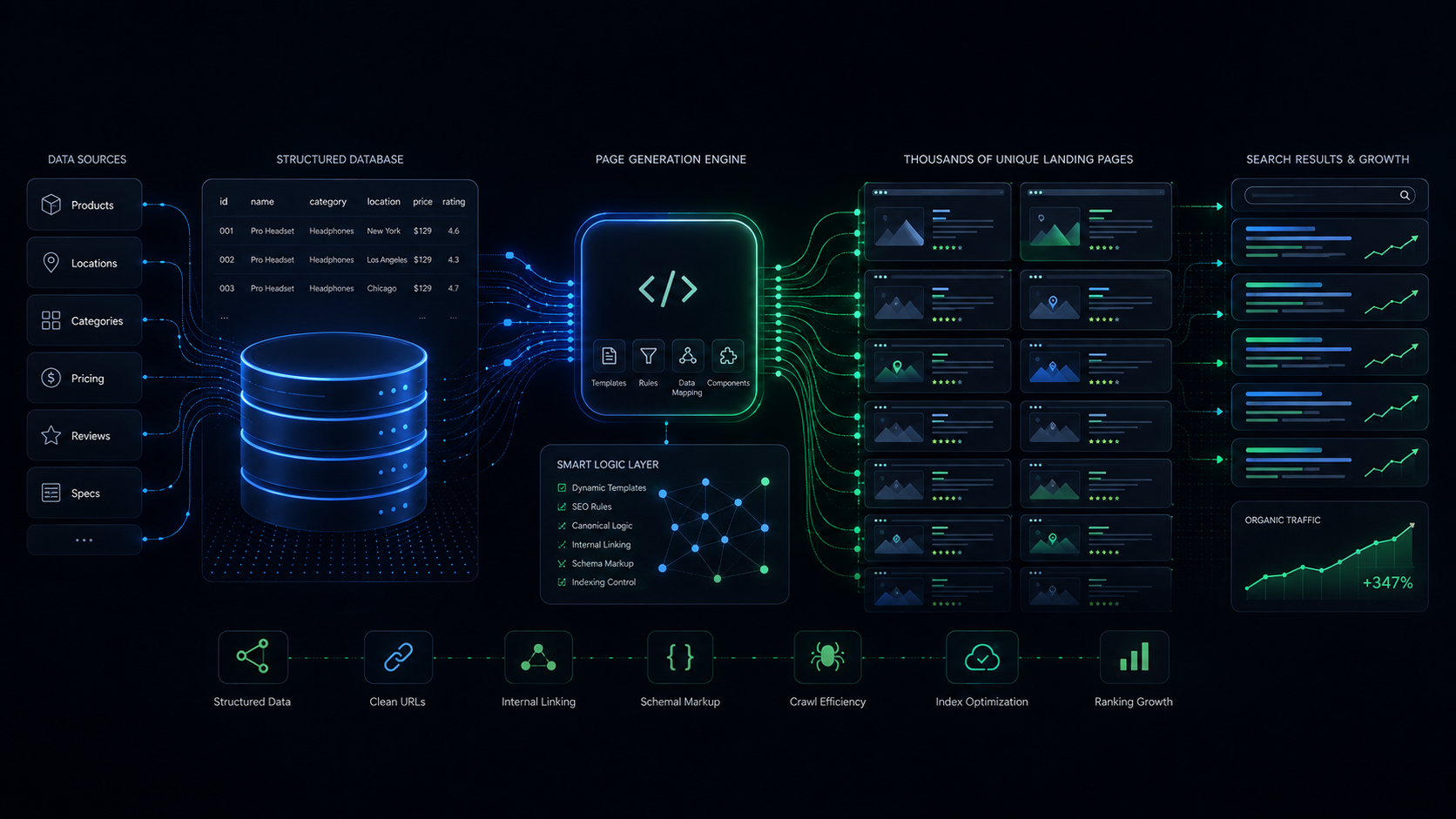
Most SEO strategies start with content, but programmatic SEO starts with data. If a business has thousands or millions of structured records—such as products, locations, properties, jobs, services, or software integrations—those records can become the foundation for a scalable organic acquisition system. Creating individual pages for every useful search query manually is impossible, making software necessary to solve the scale problem. However, scale alone is not the objective; the goal is to create genuinely useful pages at scale.
Programmatic SEO uses structured data, templates, and software to generate landing pages based on predefined rules:
Database
|
v
Structured Data
|
v
Page Template
|
v
SEO Rules
|
v
Search Landing Pages
Instead of manually building 10,000 pages, developers build a system capable of generating those pages from reliable data. However, the biggest mistake in programmatic SEO is starting with the database instead of search intent. You must first identify what users are searching for, which searches represent commercial intent, and what data you can provide that competitors cannot.
Programmatic SEO Is Not Keyword Spinning
There is a major difference between true programmatic SEO and generating thousands of pages with slightly different keywords. A programmatic page must provide meaningful differentiation rather than spinning low-value variations like “Web Development Company in London,” “Web Development Company in Manchester,” and “Web Development Company in Birmingham” with identical content. A useful location page should contain local market information, relevant services, local case studies, pricing information, customer examples, location-specific FAQs, and unique statistics.
A scalable system starts with a strong content model:
Location
├── Name
├── Country
├── Region
├── Description
├── Market Data
├── Services
├── Case Studies
├── FAQs
└── Related Locations
The page template then consumes this structured data via the formula: Page = Template + Data + SEO Rules.
Do Not Index Every Possible Combination
A programmatic SEO system should never blindly publish every possible combination. If a database contains 500 locations, 100 categories, 20 product types, and 10 filters, the theoretical number of combinations becomes enormous. Most combinations will not deserve individual pages, and generating them all results in thin content, duplicate content, poor crawl efficiency, weak internal linking, and low-quality indexed pages.
Instead, define strict business and SEO rules before publishing:
IF
search_demand = true
AND
unique_data_exists = true
AND
useful_content_exists = true
AND
business_value = true

THEN
create_indexable_page

ELSE
DO NOT INDEX
Scaling Infrastructure and Technical SEO
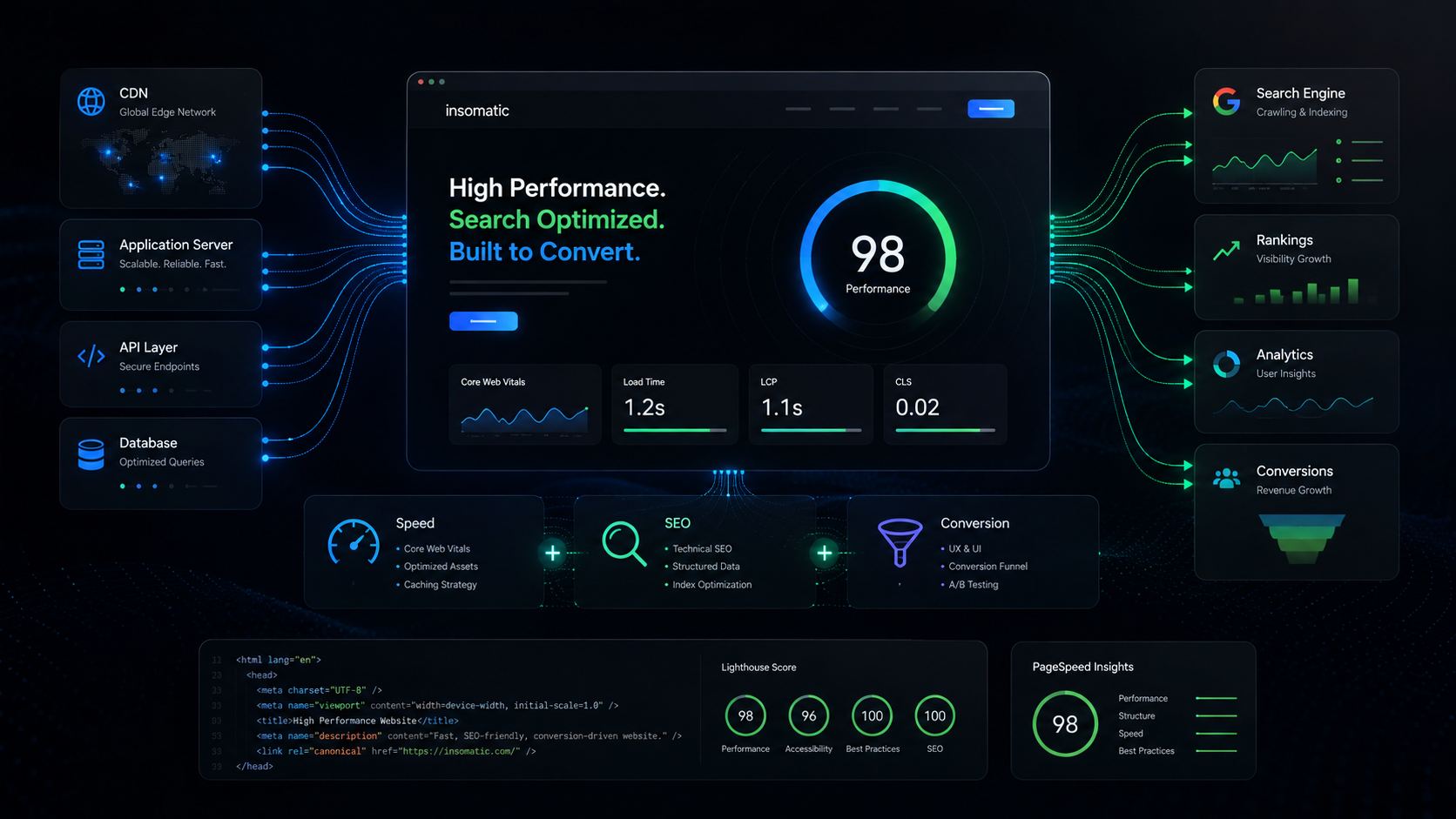
Technical SEO matters just as much for programmatic pages as it does for manual pages. The application must handle canonical URLs, metadata, structured data, XML sitemaps, robots directives, pagination, internal linking, and redirects. Furthermore, performance becomes critical at scale. A website with 100 pages can tolerate inefficient architecture that a website with 1,000,000 pages cannot. Developers must consider static generation, incremental generation, caching, database indexes, CDN delivery, and query optimization.
The strongest programmatic SEO strategies often build pages around products and interactive utilities, such as calculators, directories, comparison engines, search interfaces, market databases, and compatibility checkers. These pages succeed because the underlying product provides unique value that users cannot easily find elsewhere.
Conclusion
The competitive advantage of programmatic SEO is not the ability to produce thousands of URLs—anyone can do that. The real advantage comes from combining data, engineering, search intent, content quality, and product value into a unified acquisition engine.