From MVP to Scale: When Should a Startup Rewrite Its Website or Application?
Written by Kok Hong published on Sep 6, 2024
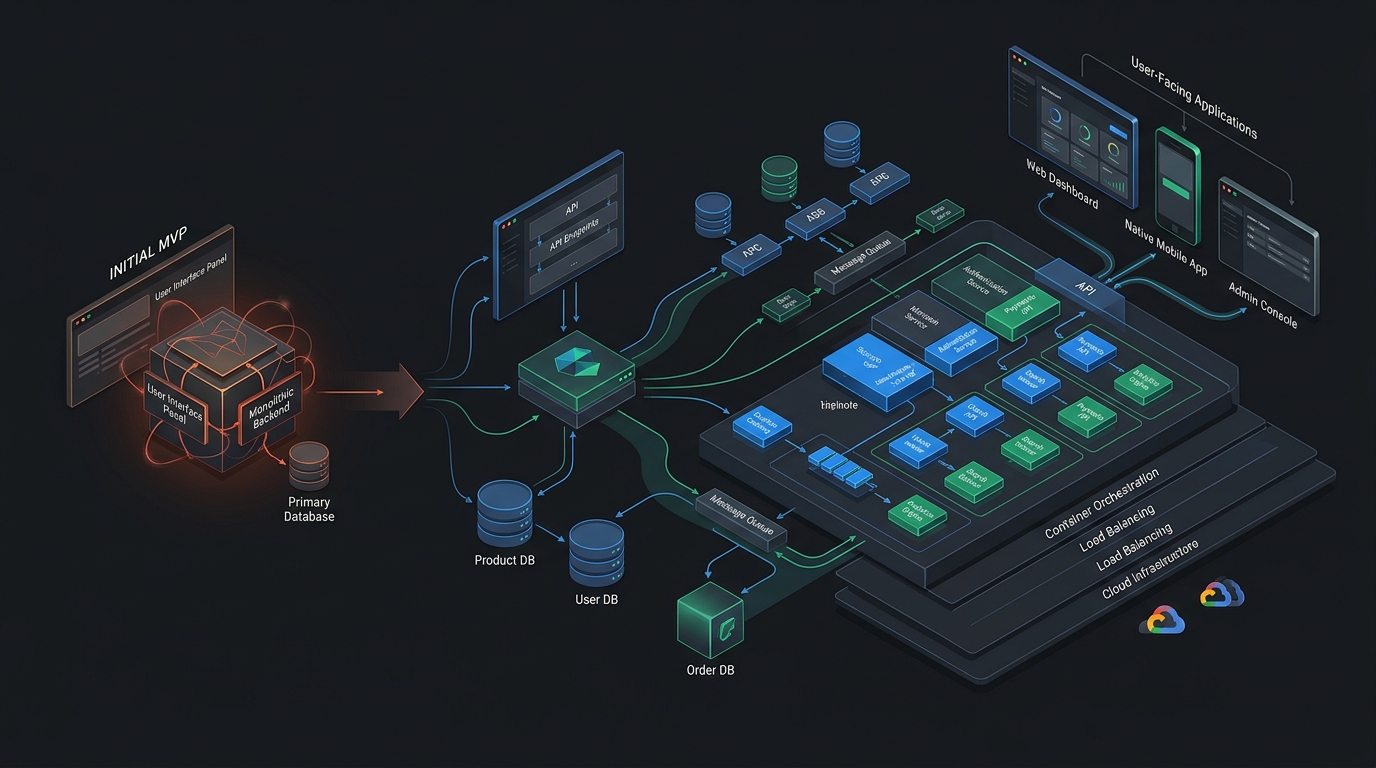
Every startup eventually encounters the same uncomfortable question: “Should we keep improving what we have, or should we rebuild it?” Existing applications become difficult to maintain, developers complain about technical debt, new features take longer than expected, and performance deteriorates. Someone proposes a clean architecture, modern technology, and a legacy-free codebase. However, rewrites are expensive, risky, and frequently take longer than planned. The right answer is rarely to rewrite everything.
MVPs are purposefully imperfect to help a business learn, making speed more important than architectural perfection early on. Early-stage teams frequently choose simple infrastructure, minimal abstractions, hard-coded workflows, basic database structures, and fast implementation to reach product-market validation faster. Technical debt becomes dangerous not when it exists, but when shortcuts stop being economically rational and start affecting business execution.
Signs That Your Architecture Is Holding You Back
Architectural stagnation manifests in distinct ways as a company scales. If relatively simple features repeatedly require massive engineering effort, or if every change creates unexpected bugs due to tight coupling and fragile dependencies, your architecture may no longer fit the product. When engineers repeatedly describe parts of the codebase as untouchable, or when infrastructure costs skyrocket without a clear driver, growth is exposing your architectural assumptions.
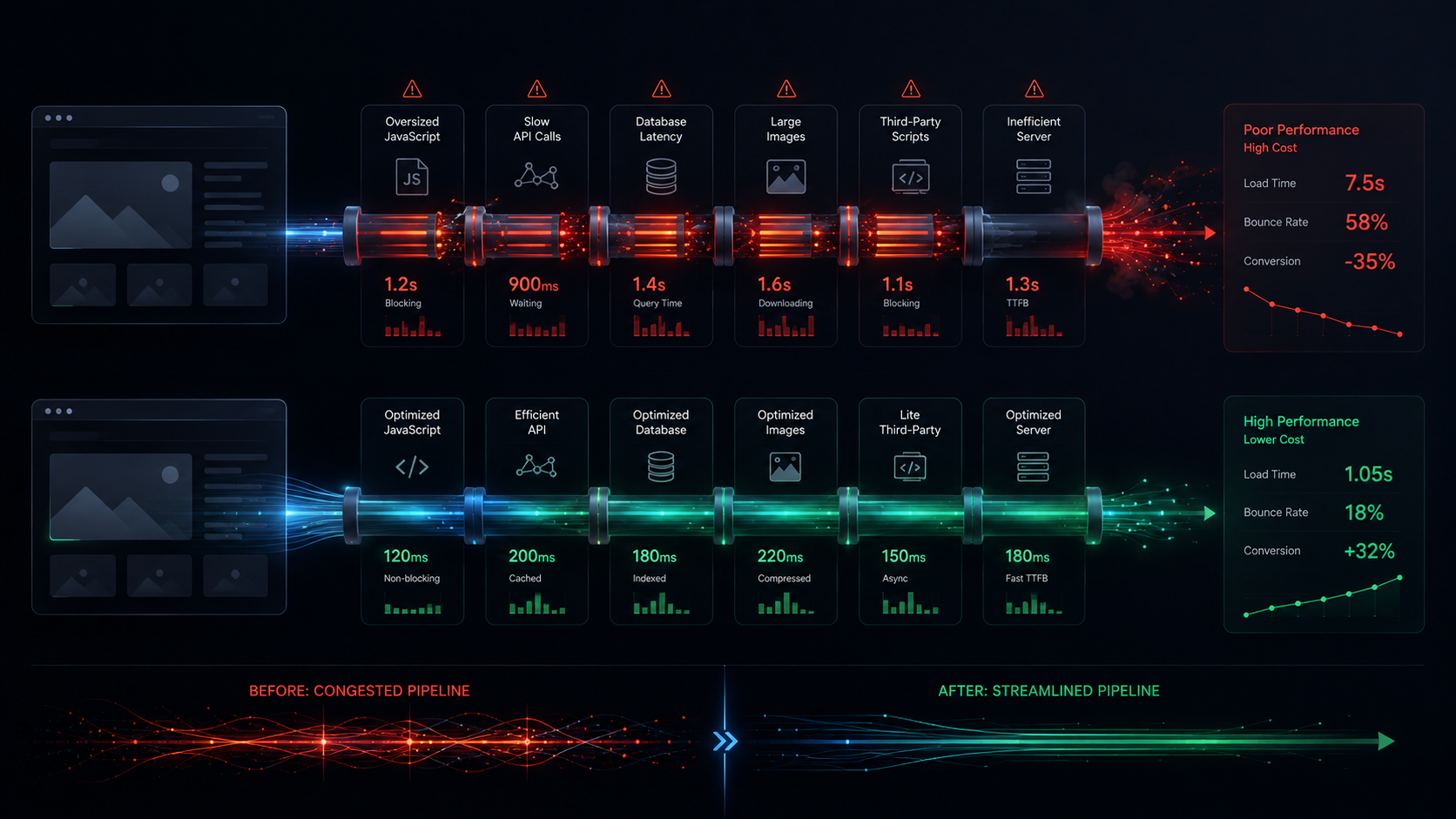
Performance also degrades as systems scale from one hundred users to one million, and from a handful of records to fifty million. Growth exposes underlying inefficiencies, but cost or messy code alone does not justify a complete system overhaul.
Rewrite vs. Refactor Strategies
Organizations have three broad approaches when dealing with aging codebases:
- Refactor: Improve the existing application incrementally by optimizing inefficient queries, introducing better abstractions, improving test coverage, and adding caching.
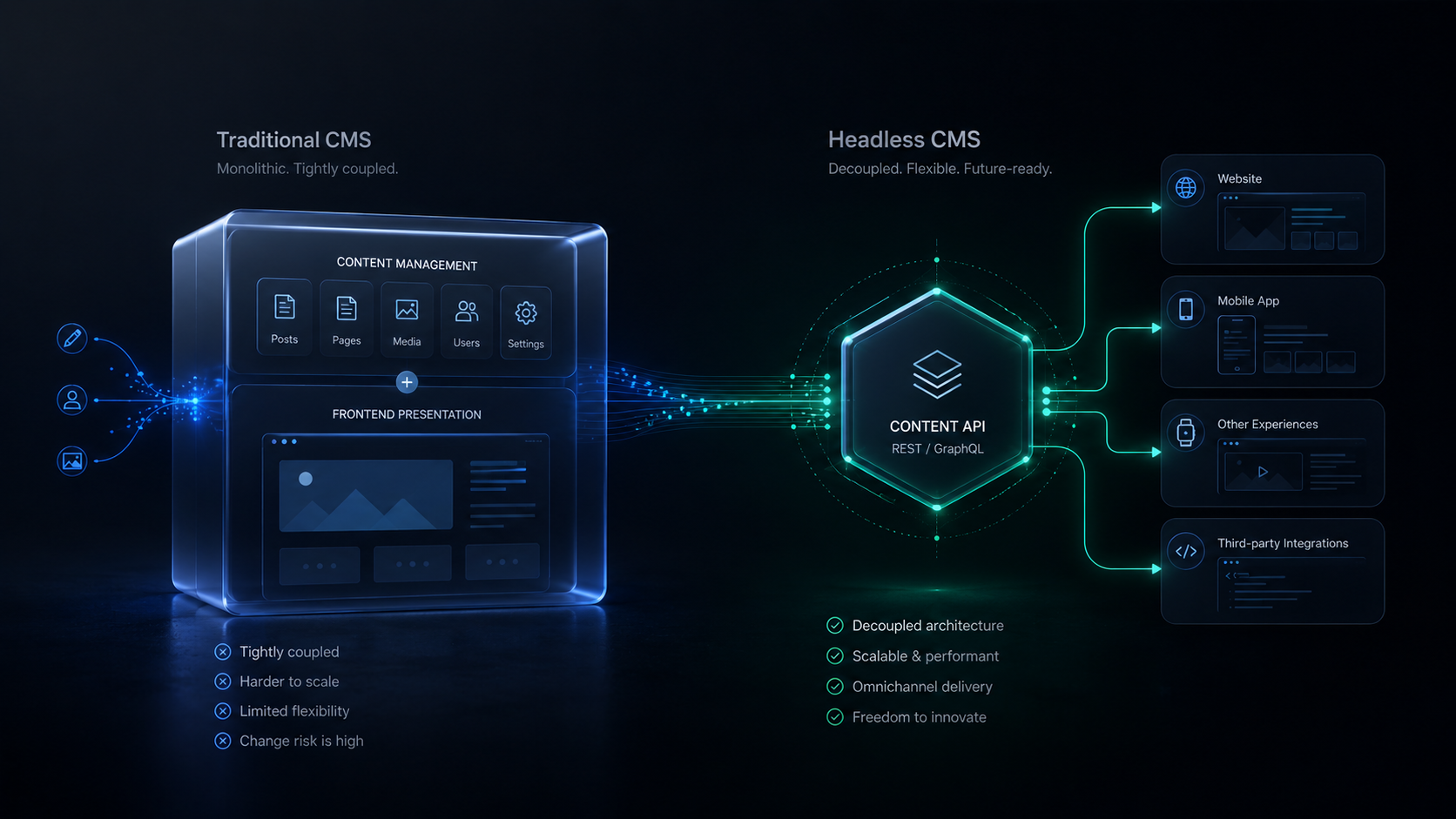
- Replace Individual Components: Swap out isolated bottlenecks—such as search, authentication, or reporting—while keeping stable parts of the application intact.
- Full Rewrite: A complete rebuild justified only when the existing architecture fundamentally prevents the business from executing its roadmap.
Existing Application
|
+-- Keep Authentication
|
+-- Keep Database
|
+-- Replace Search
|
+-- Replace Frontend
|
+-- Replace Reporting
One of the most dangerous rewrite arguments is simply saying the code is bad. Bad code is not automatically a business problem; the better question is what business outcome the current code is preventing you from achieving. Technology migrations and product strategy must remain aligned.
Managing Migration Risk and Technical Friction
Technical debt becomes easier to evaluate when tracked via quantitative metrics rather than subjective frustration. Teams should measure baseline performance indicators:
Average feature delivery: 12 days
Bug-fix overhead: 25%
Deployment time: 90 minutes
Production incidents: 6/month
Performance-related tickets: 20/week
Developer onboarding: 4 weeks
Rewrites also carry severe hidden costs, including engineering salaries, opportunity costs, delayed features, data migration complexity, operational risk, and SEO disruption. To mitigate these risks, teams can utilize a strangler architecture to migrate functionality gradually:
Users
|
New Gateway
/
/
New System Legacy System
| |
New Features Existing Features
This incremental approach avoids betting the entire business on a single high-risk launch date.
Conclusion
The decision to rewrite should be treated as a strategic investment rather than an escape from an uncomfortable codebase. The best engineering teams do not optimize for having the newest technology; they optimize for business velocity, reliability, scalability, and the ability to build what comes next.